Categories
Research

Breakdown of knowledge authority: semiotic analysis of an anti-vax conspiracy theory influencer on Twitter

Abstract

Anti-vax conspiracy theories are major drivers of “vaccine hesitancy”, a top-10 threat to global health according to the WHO. This paper investigates the interpretative mechanisms and discursive conditions of anti-vax discourse on Twitter (X), through the analysis of seven tweets posted by an anti-vax influencer. Mixed methods of discourse analysis are employed, focusing on the strategic character and potential social effects of discourse. As a set of relations, the code-text of anti-vax conspiracy theories is characterized by a conflict between authority and freedom. The archetype of the enemy is diffuse and composed of different elements (government, mainstream media, medical/scientific community) that are all totalized into one-and-the-same evil: “the authorities.” Overall, when facing the increasing deconstruction of epistemic authority on social media, the form (independently from content) with which anti-vax discourse seeks to provide argumentation (by framing identities and social relations in the shape of dichotomic oppositions) is fundamentally undesirable.

Full Citation:

Piva, H. C. (2024). Breakdown of knowledge authority: Semiotic analysis of an anti-vax conspiracy theory influencer on Twitter. Social Semiotics, 34(1), 1–22. https://doi.org/10.1080/10350330.2024.2341398​

View Publication

Categories
Research

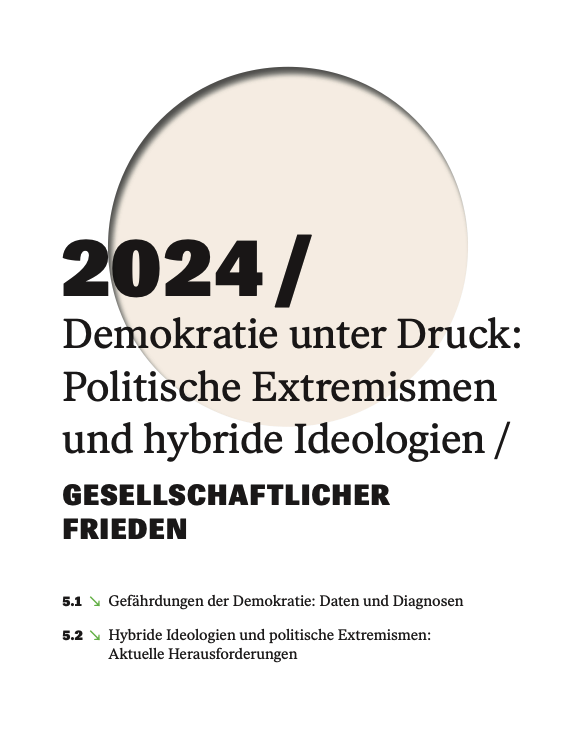
Democracy under Pressure: Political Extremisms and Hybrid Ideologies

Other Authors

Reem Ahmed; Stephen Albrecht; Lea Brost; Hendrik Hegemann; Susanne Johansson; Martin Kahl; Mona Klöckner; Janina Pawelz; Isabelle Stephanblome; Clara-Auguste Süß.

Description

In Germany, democratic institutions are losing trust and authoritarian and extremist groups are gaining support. This poses a lasting challenge to peaceful conflict resolution and democratic coexistence. Long-standing manifestations of extremism remain present. However, there is also an increasing emergence of complex ideologies, actor constellations, and activities that cannot be clearly classified into established categories and address diverse issues.

Full Citation:

Ahmed, R., Albrecht, S., Brost, L., Hegemann, H., Johansson, S., Junk, J., Kahl, M., Klöckner, M., Pawelz, J., Stephanblome, I., & Süß, C.-A. (2024). Democracy under pressure: Political extremisms and hybrid ideologies. In BICC, PRIF, IFSH, & INEF (Eds.), Friedensgutachten 2024 (pp. 135–150). transcript Verlag, Bielefeld.

View Publication

Categories
Research

Evaluation and Quality Management in Violent Extremism Prevention

Other Authors

Sarah Bressan; Mona Klöckner; Svetla Koynova; Raphaela Schlicht-Schmälzle; Désirée Theis; Sina Tultschinetski; Andreas Uhl.

Full Citation:

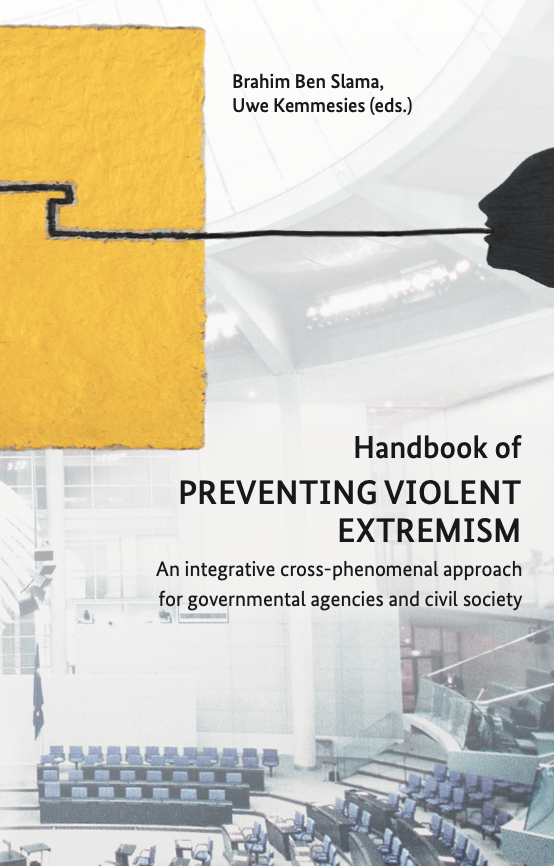
Junk, J., Bressan, S., Klöckner, M., Koynova, S., Schlicht-Schmälzle, R., Theis, D., Tultschinetski, S., & Uhl, A. (2023). Evaluation and quality management in violent extremism prevention. In B. Ben Slama & U. Kemmesies (Eds.), Handbook of Preventing Violent Extremism. An integrative cross-phenomenal approach for governmental agencies and civil society (Vol. 54, pp. 354–378). Polizei + Forschung, Wiesbaden.

View Publication

Categories
Research

Evaluation in Disengagement and Deradicalization Work

Other Authors

Marcus Kober.

Abstract

Regarding disengament and deradicalization measures in the area of Islamist extremism, there is a particularly pronounced societal interest in findings about the effectiveness of and the quality management in the measures taken. Moreover, there is a widespread lack of empirically validated evidence on how processes of deradicalization and disengagement take place in detail and how they can be positively influenced. As a result, there is a great need to conduct evaluations with different epistemological interests. Despite the high significance attached to the evaluation of measures, especially in the field of indicated prevention, they are still rare or at least rarely published. The lack of empirical findings can be attributed to various structural obstacles and methodological problems, but also to differing objectives and expectations of corresponding studies. The article describes specifics of indexed extremism prevention that complicate – or might enable – impact-oriented evaluations. The article concludes with a description of the different expectations of prevention practitioners and security authorities and suggestions for dealing with these particular challenges.

Full Citation:

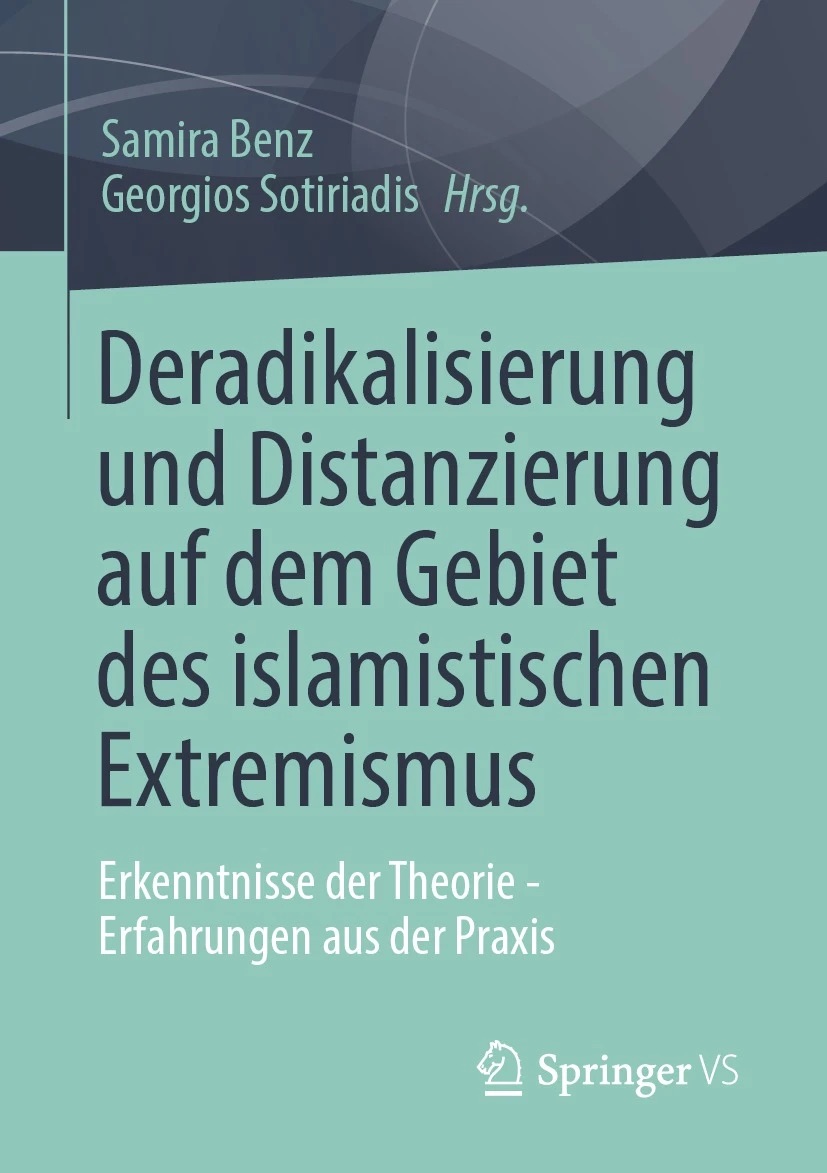
Kober, M., & Junk, J. (2023). Evaluation in der Distanzierungs- und Deradikalisierungsarbeit. In S. Benz & G. Sotiriadis (Eds.), Deradikalisierung und Distanzierung auf dem Gebiet des islamistischen Extremismus (pp. 431–445). Springer VS, Wiesbaden. https://doi.org/10.1007/978-3-658-39807-1_22

View Publication